A practical guide to the six stages of histology – grossing, processing, embedding, sectioning, staining and archiving – and the equipment decisions that matter at each one.
A histology laboratory is not a list of machines. It is a chain.
A tissue processor that is too small creates a permanent bottleneck at embedding. A microtome that cannot hold a stable section thickness wastes the good work done upstream. A storage cabinet that is not dust- and moisture-proof puts years of archived blocks and slides at risk.
That is why the most expensive mistake in pathology equipment purchasing is not paying too much for one instrument – it is buying instruments that do not fit each other.
This guide walks through each stage of the workflow, what the equipment actually has to do, and the questions to ask before you sign a purchase order. It is written for hospital pathology departments, independent histology and research laboratories, and distributors sourcing equipment for their own markets – the readers we have supplied from our factory in Shenyang, China since 2016.
Grossing is where the diagnosis begins: the specimen is described, measured, dissected and sampled into cassettes. Whatever happens here sets the ceiling on everything downstream.
What the equipment must do
What to check before buying: whether the entire work area is stainless steel (not just the benchtop), how the sink drains, how easy the surface is to decontaminate between cases, and whether the footprint fits your grossing room.
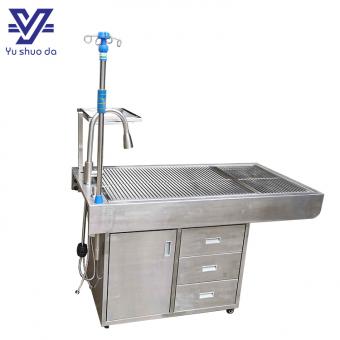
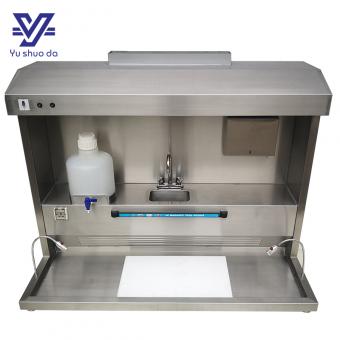
Yushuoda solution: our stainless steel pathology work station / grossing station is built with an all-stainless-steel work area and an integrated sink. For departments that prefer separate furniture, we also supply stainless steel specimen sampling tables and lifting carts.
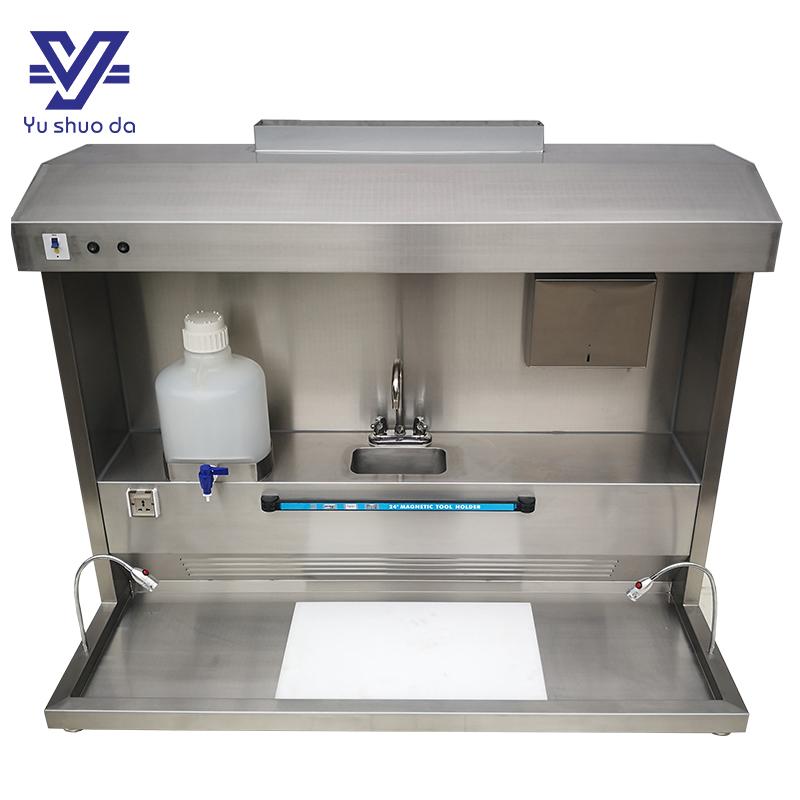
Yushuoda YS-AS01 pathology grossing station – 304 stainless steel work area, integral sink, LED lighting on flexible arms and exhaust duct for connection to the building ventilation system.
The tissue processor is the engine room of the laboratory. It moves specimens through fixative, graded alcohols, clearing agents and molten wax on a timed protocol, usually overnight.
What to check before buying
Yushuoda solution: our tissue processor range is designed for routine histopathology workloads, and we support installations with spare parts and technical documentation. Because we manufacture on our own production line, capacity and configuration options can be matched to your case mix. A laboratory in Kenya ordered five of our tissue processors, and dehydration capacity remains one of the most common first questions we receive from new histology labs.
Embedding orients the specimen and locks it in paraffin so it can be sectioned. Poor embedding cannot be rescued by a better microtome.
What to check before buying
Yushuoda solution: embedding centers are one of our core production lines, and every embedding center is run for 24 hours as a final test before it leaves the factory. Our embedding center with cold plate uses an OLED touchscreen with PID temperature control and a 6 L paraffin chamber. Around the center we supply the complete consumable set:
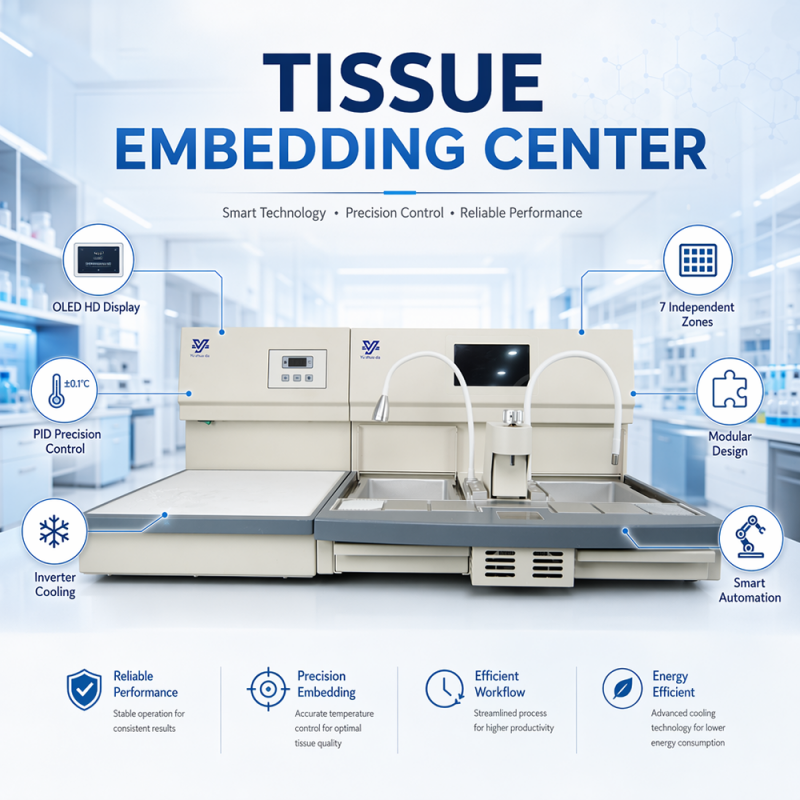
Yushuoda embedding center – cold plate, OLED touchscreen display and PID temperature control with a 6 L paraffin chamber. Each unit is run for 24 hours before dispatch.
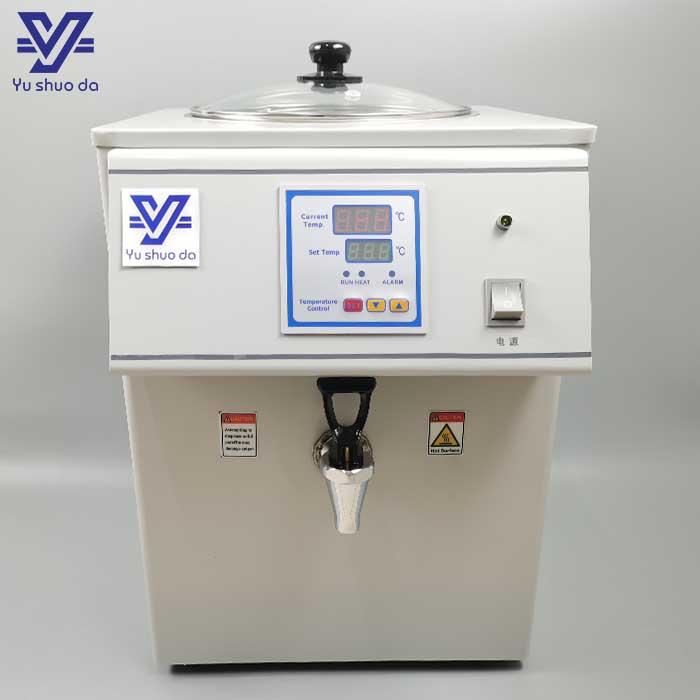
Yushuoda 10 L laboratory tissue paraffin dispenser – stainless steel construction with intelligent digital temperature control and LED display of the heating state.
This is the most technique-sensitive step in the workflow, and the one where instrument quality shows up fastest.
For routine paraffin blocks. The manual Yushuoda rotary paraffin microtome YSD-5000 covers a section thickness range of 0–60 micrometre and includes a specimen retraction function, so the block face does not drag across the knife on the return stroke. It is designed for histology and histopathology laboratories, research labs working in histology, and industrial quality assurance, and because it is manual it can be placed anywhere in the laboratory. For higher throughput we also manufacture the YSD-7000 semi-automatic microtome.
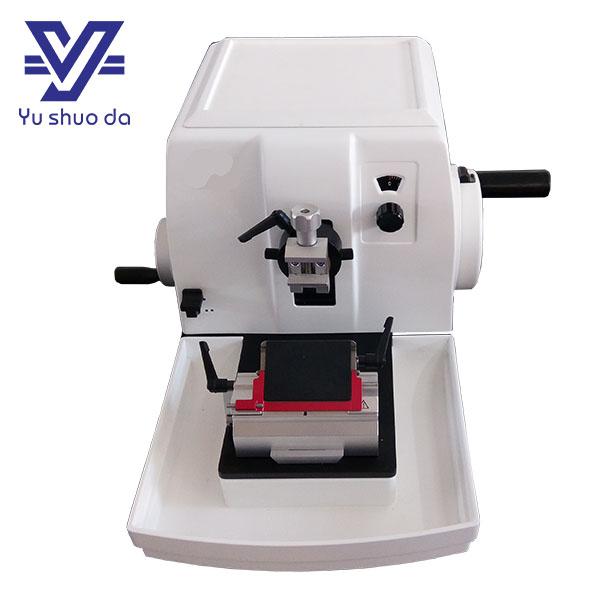
Yushuoda YSD-5000 rotary paraffin microtome – 0–60 micrometre section range with specimen retraction, for histology and histopathology laboratories, research labs and industrial quality assurance.
For frozen sections – intraoperative consultation and rapid immunohistochemistry, where the answer is needed in minutes. A cryostat keeps the specimen rigid at sub-zero temperature so it can be cut without paraffin embedding, and it demands a cold chamber that holds temperature evenly.
Our YSD-CM3100 cryostat microtome is a −60 °C touch-screen unit built for pathology laboratories, medical research institutions and teaching units. It provides up to 21 specimen positions, uses UV light disinfection to reduce pathogen contamination inside the chamber, and runs on an imported Secop compressor. Cryostats are durability-tested on our own production line before dispatch, and this model is supplied with CE marking and a 2-year warranty.
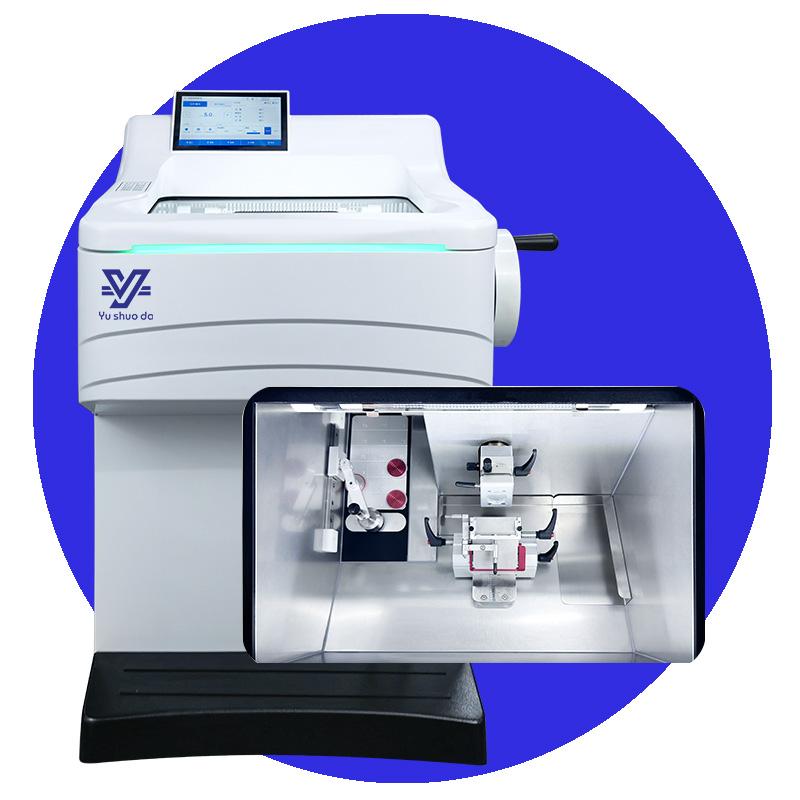
Yushuoda YSD-CM3100 cryostat microtome – −60 °C chamber, touch-screen control, up to 21 specimen positions, UV light disinfection and a Secop compressor.
| Rotary paraffin microtome | Cryostat | |
|---|---|---|
| Sample state | Paraffin-embedded block | Fresh / frozen tissue |
| Typical use | Routine surgical pathology, research | Intraoperative frozen sections, rapid IHC |
| Working temperature | Room temperature | Sub-zero, thermostatically controlled chamber |
| Section range (example) | 0–60 micrometre (YSD-5000) | Model and protocol dependent (YSD-CM3100: down to −60 °C chamber) |
| Main purchase criteria | Section stability, retraction, blade system | Temperature stability, chamber access, defrost control, blade system |
Rotary microtome or cryostat? A quick comparison of sample state, typical use and the criteria that matter when you compare quotes.
The blade system determines section quality, blade life, and how much you will spend every year. We supply:
A practical tip from our export experience: choose the blade platform your local or regional supplier can restock reliably. Consumable continuity matters more than the last few percent of unit price.
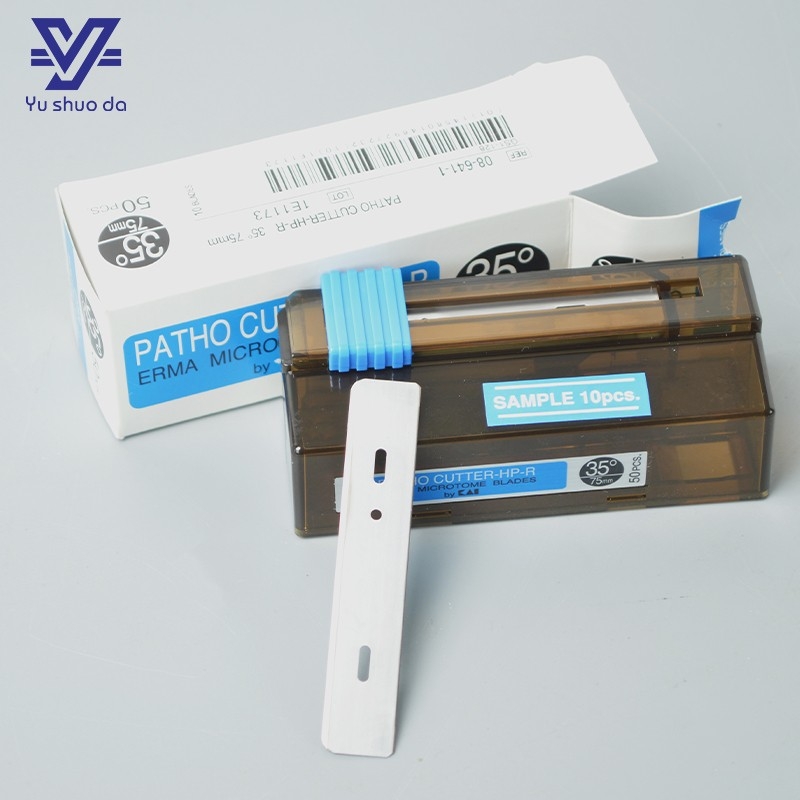
Japan-made ERMA high-profile microtome blade supplied by Yushuoda – 304 stainless steel, 35-degree cutting angle, 75 × 14 mm, fitting most rotary paraffin microtomes.
Routine H&E, special stains, immunohistochemistry and in-situ hybridisation all depend on reproducible staining and clean slide handling.
What to check before buying: reproducibility between runs and between operators, fume containment, slide capacity, the drying or warming temperature range you actually need, and whether the baths and jars suit the protocols you run most often.
Yushuoda solution
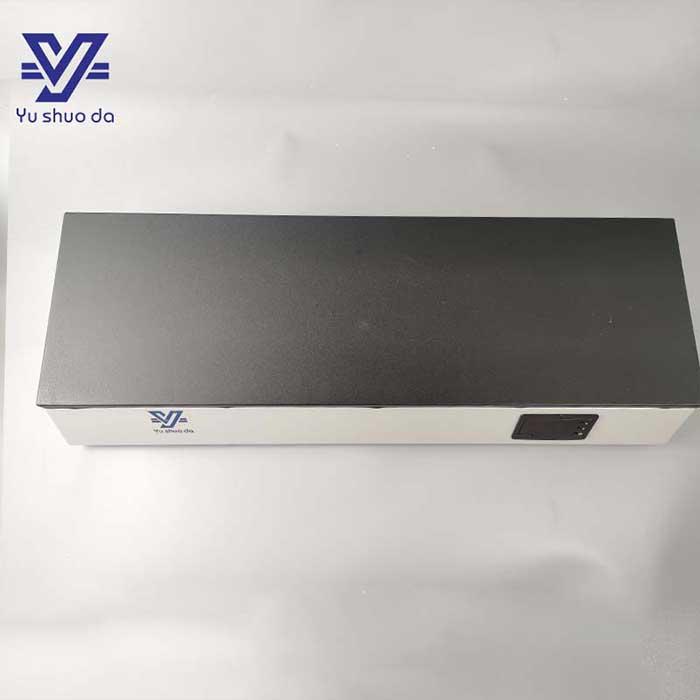
Yushuoda tissue pathology slide warmer, 60-slide format – temperature settings from room temperature to 70 °C, with an anodised black surface for section contrast.
Blocks and slides are legal and diagnostic records. Retention periods are measured in years, sometimes decades, so archiving equipment is clinical equipment.
What to check before buying
Yushuoda solution
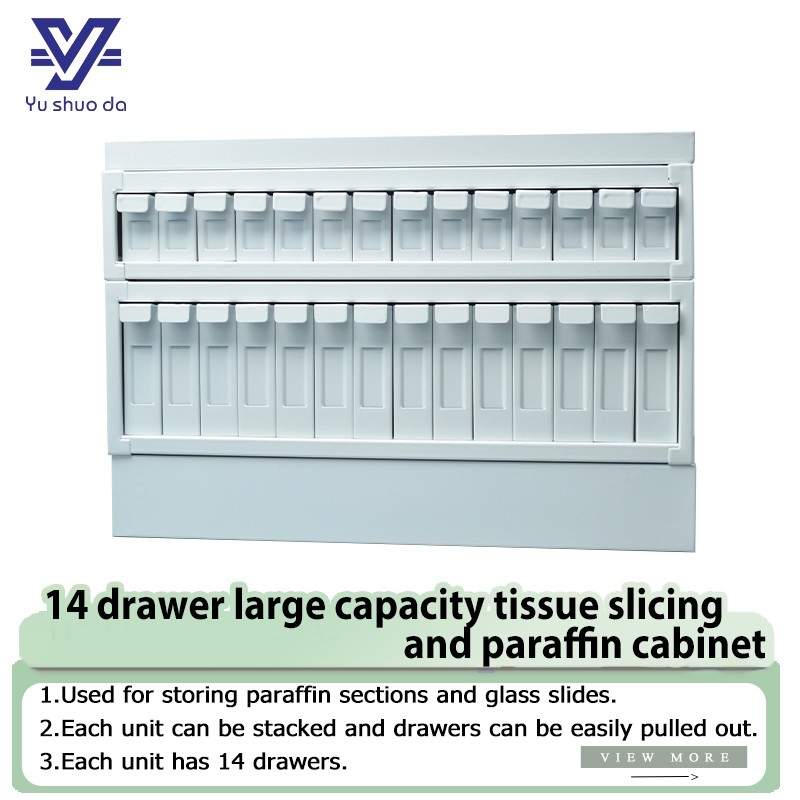
Yushuoda stainless steel slide and wax block storage cabinet – 14 drawers per unit, about 65 blocks per drawer, for long-term pathology archiving.
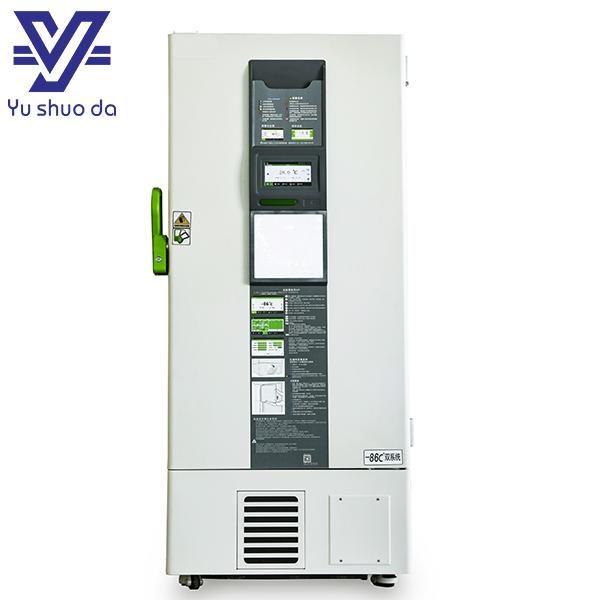
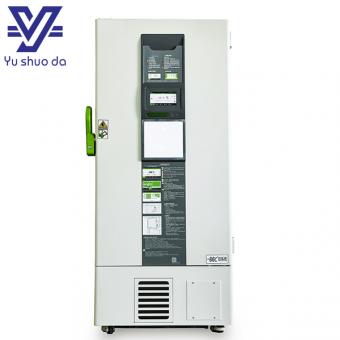
Yushuoda −86 °C ultra-low temperature freezer – for long-term storage of specimens, reagents and biological samples, with a stainless steel 304 interior.
| # | Question | Why it matters |
|---|---|---|
| 1 | How many blocks and slides do we process on the busiest day? | Sizing to peak volume prevents the bottleneck that costs you throughput every week |
| 2 | What section thickness range and stability does the microtome guarantee? | Section quality drives re-cuts, turnaround time and diagnostic confidence |
| 3 | Can one supplier cover consumables – cassettes, blades, wax, slides? | Fewer compatibility surprises, simpler stock control, one shipment |
| 4 | What materials are used, and what are they resistant to? | Stainless steel grade and solvent resistance determine service life |
| 5 | Does it fit the room, the bench and the operator? | Ergonomics and footprint decide whether the equipment gets used well |
| 6 | What certification and documentation come with it? | CE marking, business licence and test reports are often mandatory in tenders and at import |
| 7 | Can it be customised for our market? | Voltage, plugs, labelling, branding and configuration often need to change |
| 8 | How is it packed and how long is delivery? | Plywood export packing and realistic lead times protect your project schedule |
| 9 | What happens when something stops working? | Warranty length, spare parts and technical response time decide your real downtime |
Complete workflow coverage. Grossing station, tissue processor, embedding center, paraffin dispenser, microtome, cryostat, staining, consumables and archive cabinets – plus mortuary products, laboratory refrigerators and veterinary equipment. Buying the chain from one manufacturer removes compatibility risk and shortens procurement.
Own factory, own testing. Our manufacturing roots go back to 1984, with the current company and its dedicated export department established in 2016. Equipment is produced and tested in-house: every product is strictly tested before dispatch, cryostats are durability-tested, and embedding centers run a 24-hour final test. We also operate our own laboratory – with fume cabinet, grossing station, cryostat, microtome, tissue processor and microscope – for R&D, testing and customer sample work.
Certification and quality management. Yushuoda holds CE certificates and a medical equipment business licence, and operates an ISO-based quality system.
Export experience in more than 30 countries. Our equipment has been shipped to the United States, Canada, Mexico, Australia, South Korea, Thailand and other markets. Recent examples from our case pages include 4 sets of slide storage cabinets shipped to Nigeria, 50 boxes of Feather microtome blades to Nigeria, 10 ultra-low temperature refrigerators to Switzerland and pharmacy refrigerators to the Philippines.
Stock and realistic lead times. Most pathology equipment is kept in stock, with delivery in around 7 days for standard items.
OEM and ODM. Our design team develops customised product design and production solutions for distributors and private-label programmes.
Service that answers. A 1-year warranty as standard, with a 2-year warranty on cryostat models, free maintenance within the warranty period, replies to enquiries within 24 hours, and export shipping arranged through DHL, TNT, UPS, FedEx and EMS – or your own forwarder.
Six groups: a grossing station and sampling tables; a tissue processor; an embedding center with wax dispenser; a microtome and, if you need frozen sections, a cryostat; staining equipment, slide warmers and floatation baths; and archival cabinets plus temperature-controlled storage for reagents and specimens.
A rotary microtome sections paraffin-embedded blocks at room temperature and is the workhorse of routine surgical pathology. A cryostat sections fresh or frozen tissue inside a sub-zero chamber and is used when a rapid answer is needed, such as intraoperative consultation.
Routine diagnostic sections are typically cut at a few micrometres, but a usable range gives you flexibility for research work. The Yushuoda YSD-5000 covers 0–60 micrometre.
On the return stroke, retraction moves the block slightly away from the blade so the block face is not dragged across the cutting edge. The result is less compression and damage to the section face, and longer blade life.
In labelled, dust-proof and moisture-proof cabinets that keep them cool, dry and easy to retrieve, sized to your annual case volume. Cabinets described in this guide range from about 900 blocks per unit up to approximately 21,000 blocks in a six-drawer ABS unit, with combination cabinets for slides and blocks together.
Yes. We provide OEM and ODM services covering configuration, branding and market-specific requirements, and our design team can develop dedicated solutions for distributors.
Standard pathology equipment is usually held in stock with delivery in around 7 days. Send us your daily block and slide volume, your section thickness requirements and your destination port, and our team will reply within 24 hours with a configuration and quotation.
Send us three numbers – blocks per day, slides per day, and the section thickness you need – and we will come back with a configuration that fits them, not a catalogue.
Yushuoda – Shenyang Yushuoda Science and Technology Ltd – manufactures pathology and histology equipment, laboratory consumables, mortuary products and laboratory refrigeration for laboratories and distributors in more than 30 countries. Learn more about our factory and quality control.
 Send A Message
If you are interested in our products and want to know more details,please leave a message here,we will reply you as soon as we can.


 IPv6 network supported
 English
 русский
 español